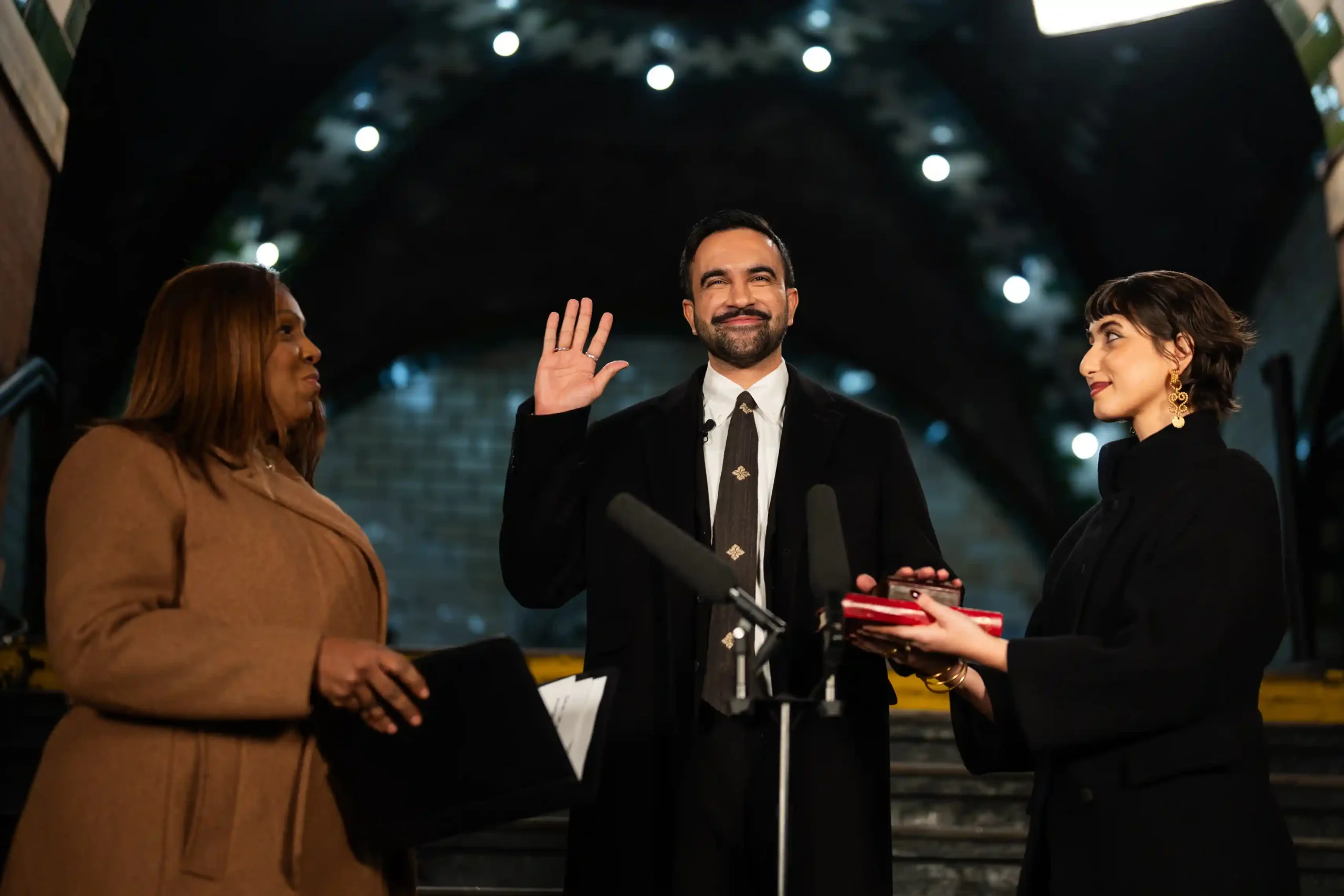
Imagine standing in the biting cold of a January morning in 2026, the air crisp with that unmistakable New York edge, as thousands gather outside City Hall. The crowd buzzes with a mix of hope and skepticism, cheering as Zohran Mamdani, a 34-year-old democratic socialist born in Uganda to Indian parents, raises his hand to take the oath as the 112th mayor of New York City. It’s a scene straight out of a movie— the first Muslim, first South Asian mayor of the nation’s largest city, promising to rewrite the rules for the working class. But as the confetti settles, the real story begins. Mamdani didn’t just win an election; he ignited a movement. Yet, governing eight million people in a city that’s equal parts dream factory and pressure cooker? That’s where the plot thickens. I’ve walked these streets for years, from the bustling markets of Queens to the shadowed alleys of the Bronx, and I’ve seen mayors come and go. Mamdani’s challenges aren’t just policy puzzles—they’re the kind that test a leader’s soul.
The Unlikely Path to City Hall
Zohran Mamdani’s journey to mayor feels like one of those underdog tales that New Yorkers love. Raised in a modest immigrant family, he cut his teeth as a foreclosure prevention counselor, helping families cling to their homes during tough times. By 2020, he was in the New York State Assembly, championing bold ideas as a member of the Democratic Socialists of America. His 2025 mayoral campaign? A lightning bolt. He edged out heavyweights like Andrew Cuomo in the Democratic primary and then the general election, riding a wave of frustration over skyrocketing rents and inequality. “New York is the greatest city on the globe,” he often says, but only if it’s affordable for everyone. His agenda—universal childcare, free buses, rent freezes—tapped into the city’s pulse. But as someone who’s chatted with cabbies and corner store owners, I know promises are easy; delivery is the hard part.
From Assemblyman to Mayor: Key Milestones
Mamdani’s political rise wasn’t overnight. He flipped a safe Democratic seat in 2020 with grassroots energy, focusing on housing justice. In the Assembly, he pushed for tenant protections and police accountability, earning allies among progressives. His mayoral win in November 2025, with 50.78% of the vote, shocked the establishment. Now, as mayor, he’s assembling a team of like-minded reformers, including retaining NYPD Commissioner Jessica Tisch for continuity amid change.
- Campaign Highlights: Beat Cuomo twice—once in the primary, again as an independent.
- Personal Touch: Often shares stories of his immigrant roots, like eating bagels and lox as a Muslim kid in NYC.
- Early Actions: Signed executive orders on day one to protect tenants and revoke some of Adams’ policies.
Challenge 1: Paying for Ambitious Policy Promises
Let’s talk money—because in New York, everything comes down to the Benjamins. Mamdani swept into office vowing to make life cheaper for everyday folks: free childcare for all, citywide free bus rides, even government-run grocery stores to fight food deserts. Sounds great, right? But the city’s facing massive budget gaps, and his plan to hike corporate taxes from 7.25% to 11.5% and squeeze $9 billion from the wealthy needs a green light from Albany. I’ve seen friends struggle with rising costs— one buddy, a teacher in Brooklyn, juggles two jobs just to cover rent. Mamdani’s ideas could be a lifeline, but without state buy-in, they’re pipe dreams.
Budget Shortfalls and Fiscal Realities
New York’s FY 2026 budget is already strained by growing safety net programs and economic uncertainty. Mamdani’s team estimates his agenda could cost billions, but city-funded initiatives have ballooned, leaving little wiggle room. Governor Kathy Hochul, eyeing her own re-election, has signaled support for affordability but balked at broad tax hikes.
Funding Strategies: Pros and Cons
Pros of Mamdani’s tax-the-rich approach: It targets inequality, potentially funding social services without burdening the middle class. Cons: Risk of “wealth flight,” as business leaders warn of companies fleeing to lower-tax states like Florida.
| Strategy | Potential Revenue | Risks |
|---|---|---|
| Corporate Tax Hike | Up to $2B annually | Business exodus, job losses |
| Wealth Tax on High Earners | $9B over four years | Legal challenges, reduced investment |
| Federal Partnerships | Variable grants | Uncertainty under Trump administration |
Real-World Examples
Think back to de Blasio’s universal pre-K—funded by a millionaire tax that actually worked. But Mamdani’s scale is bigger, and with Trump in the White House threatening cuts, it’s like trying to fill a leaky bucket. A little humor here: If taxes chase away the billionaires, at least the Hamptons traffic might lighten up.
Challenge 2: Navigating Federal Interference and Immigration Tensions
Ah, the elephant in the room—or should I say, the Trump Tower shadow? Mamdani’s immigrant-friendly stance clashes head-on with President Trump’s hardline policies. As mayor of a sanctuary city, he’s pledged to protect undocumented residents amid ramped-up ICE raids. I recall a conversation with a DACA recipient in Queens who fears deportation daily; Mamdani’s words—”a city built by immigrants”—resonate deeply. But avoiding White House wrath means walking a tightrope, especially with threats to withhold federal funds.
Immigration Policies Under Scrutiny
Trump labeled Mamdani a “communist” during the campaign, but their post-election meeting was cordial. Still, New York has dodged National Guard deployments so far, unlike other cities. Mamdani’s agenda includes easing access to city resources for immigrants, but federal overreach could derail that.
Pros and Cons of Sanctuary Stance
Pros: Builds trust in diverse communities, boosts economic contributions from immigrants. Cons: Potential loss of federal aid for infrastructure and housing.
- Key Actions: Advocate for tenant organizations and social services.
- Challenges: Balancing local protections with national enforcement.
- Emotional Appeal: Stories like Mamdani’s own—arriving as a child—humanize the issue, reminding us NYC thrives on its melting pot.
Comparison to Past Mayors
Unlike Bloomberg’s business-first approach, Mamdani echoes Koch’s populism but with a socialist twist. If Trump intervenes, it could mirror Reagan’s battles with liberal cities—tense, but often resolved through negotiation.
Challenge 3: Winning Over Business Leaders and Preventing Economic Flight
New York’s the financial capital of the world, but Mamdani’s tax plans have Wall Street sweating. I’ve grabbed coffee with finance folks who whisper about packing up for Miami if hikes hit hard. His outreach to CEOs like Jamie Dimon is smart, but convincing them he’s not anti-business is key. Real estate developer Jeffrey Gural called him “personable,” yet fears linger about inexperience driving away investment.
Business Community Dynamics
Mamdani needs finance and real estate buy-in for economic stability. His promises could stimulate growth through affordability, but threats of exodus loom large.
Economic Impact Table
| Sector | Mamdani’s Proposal | Potential Outcome |
|---|---|---|
| Finance | Higher taxes | Reduced bonuses, relocations |
| Real Estate | Rent freezes | Slowed development, but stabilized neighborhoods |
| Small Business | Free services | Boosted consumer spending |
Humor and Relatability
Picture this: A billionaire complaining about taxes while sipping a $9 coffee—Mamdani’s line about NYC’s unique vibes hits home. But seriously, fostering dialogue could turn skeptics into partners.
Challenge 4: Tackling Public Safety and Crime Perceptions
Public safety isn’t just stats; it’s peace of mind. Crime dipped to near-record lows in 2025, but Mamdani’s vision—a new Department of Community Safety for mental health responses—builds on that while reforming policing. Retaining Commissioner Tisch was a surprise move, blending continuity with change. I’ve felt the subway jitters myself; his focus on outreach workers could make rides safer, but results will define his tenure.
Crime Trends and Reforms
Homicides and shootings are down, but quality-of-life issues like shoplifting persist. Mamdani aims to invest in mental health teams, addressing root causes over heavy policing.
Pros and Cons of Community Safety Approach
Pros: Reduces over-policing, improves community trust. Cons: Slower response times if not scaled properly.
- Initiatives: Mental health in subways, crisis teams.
- Examples: Builds on Adams’ “War on Rats”—wait, that’s literal rats, but metaphorically, crime’s the real pest.
- Comparison: Unlike Giuliani’s zero-tolerance, Mamdani leans toward de Blasio’s reforms but with more ambition.
Additional Hurdles from the Horizon
Beyond the big four, Mamdani faces inherited messes like closing Rikers Island by 2027—over budget and delayed—or fixing NYCHA’s $78 billion repair backlog. Street vendor licenses are expanding, but unlicensed sellers create chaos. Then there’s the NYPD scandals: lawsuits alleging corruption demand swift action.
Pros and Cons of Jail Reforms
Pros: Humane treatment, cost savings long-term. Cons: Neighborhood opposition to new facilities.
| Issue | Status | Mamdani’s Plan |
|---|---|---|
| Rikers Closure | Delayed | Negotiate with federal receiver |
| NYCHA Repairs | $78B needed | Seek federal funds, enforce violations |
| Vendor Licenses | Expanding to 17K | Balance with storefront complaints |
People Also Ask (PAA)
Drawing from common searches, here are real questions people are asking about Mamdani’s challenges:
- What are the main challenges for Zohran Mamdani as NYC mayor? Funding promises, federal tensions, business relations, and public safety top the list.
- How will Mamdani handle budget issues in 2026? By proposing taxes on the wealthy and seeking state approval, though shortfalls persist.
- What is Mamdani’s approach to immigration under Trump? Emphasizing sanctuary policies while avoiding direct confrontations.
- How does Mamdani plan to improve public safety? Through a new department focused on mental health and community outreach.
- Could Mamdani’s policies lead to business exodus? Critics say yes, but he argues affordability will boost overall economy.
FAQ
1. Who is Zohran Mamdani and why is he facing these challenges?
Zohran Mamdani is NYC’s new mayor, a democratic socialist with bold progressive ideas. His challenges stem from inheriting a complex city with budget woes, political divides, and high expectations from his campaign promises.
2. How does Mamdani plan to fund free childcare and buses?
Through tax hikes on corporations and the wealthy, aiming for $9 billion in revenue, but this requires Governor Hochul’s nod and could face resistance.
3. What role does public safety play in Mamdani’s agenda?
It’s foundational—he’s creating a Department of Community Safety to prioritize mental health over traditional policing, while keeping key NYPD leadership.
4. Will federal policies under Trump affect NYC under Mamdani?
Potentially yes, especially on immigration and funding, but Mamdani’s outreach to Trump aims to mitigate conflicts.
5. How can everyday New Yorkers get involved in addressing these challenges?
Engage through community boards, tenant associations, or advocacy groups—Mamdani’s administration emphasizes grassroots input for policies like housing protections.
In wrapping up, Mamdani’s tenure could redefine New York, turning challenges into triumphs. But as a lifelong New Yorker, I know the city’s spirit lies in its resilience. Whether he succeeds depends on collaboration, not just charisma. For more on NYC politics, check our internal link to NYC election analysis. External resources: BBC’s in-depth coverage here and NYT’s policy breakdowns here.